A note to start, this
post will be about books that I've read that were turned into a TV show or
movie that I've also seen. I won't include those where I've only read the book
or only seen the show/movie, so this list will be incomplete compared to that
many of you might have.
So what do I think makes a movie or show adapted from a book good?
Onwards to revelations!
Faithfulness to the source material
 |
| Themeplus via Flickr |
For starters, we read
books but we watch movies. Where books leave a lot to the imagination, movies
have to show us everything. Second, fantasy books tend to be very long. Books
that are hundreds of pages long that are also part of a trilogy or series clash
with the budgets that restrain the ambitions of most shows and movies. Third,
one of the reasons why fantasy books are so long is the world building that
usually goes into them, which involves information/explanations in the form of
an 'info dump'. These are usually completely aside from the scene taking place,
and movies/shows just can't do that. At best they can use a narrator, but
having a voice say anything longer than a couple of sentences long would
suck... quite a lot.
Those are just some
differences that will require the adaptation to do things differently. What I
hope for, then, is that certain key parts of the book(s) are maintained at
least in spirit: the characters seem the same, even if they don't do the same
things; the world has the same tone to it, even if parts of its history is
altered; the story has all the biggest moments, even if they get there from a
different angle.
It's all about the Benjamins...
 |
| Mezclaconfusa via Flickr |
Fantasy has magic, and
mythical creatures, and entirely different landscapes and cities to show. To
show them well costs money and time, and time costs even more in money. Not
every book can get the budget of Game of Thrones or Lord of the Rings to
sustain the project for so long. Most shows or movies will have to make do with
budgets far lower than that. Some fantasy/sci-fi shows can do so rather well
(Doctor Who, Firefly), but a lot just can't... and trying to do so while
adapting a script from a book is even harder.
This is why trying to
adapt a book with a much smaller scope is far easier. Books that take place,
more or less, in the same place where that place is a simple village or city is
a lot easier to replicate with a lower budget than having a book take place all
over an epic world with massive castles made of diamonds that's also carved out
of an entire mountain, or something. Similarly, a book that doesn't have a lot
in the way of magic or magic creatures, or epic battles, also makes the job
easier.
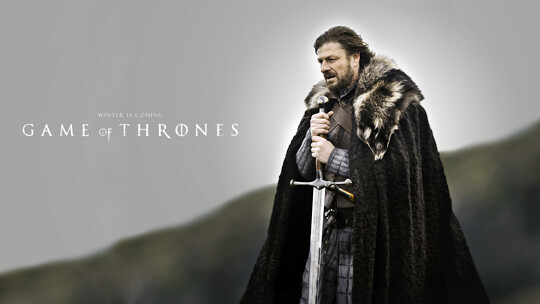
This is one of the
reasons why I think Game of Thrones has been adapted so well. It has some epic
settings and a large world, but not much in the way of fireballs and conjured
lightning or massive Balrogs. There are some dragons, but they're pretty low
key so far through the series. The books are also more about intrigue than they
are about epic battles, and even in the book some battles are mentioned only in
passing and not told over the span of multiple chapters.
Epic Is Bad, Small Is Good
 |
| Torre.elena via Flickr |
The same holds true for the nature of the story. Epic fantasy
needs epic investments in time and money from studios, and trying to make an
adaptation without those investments will doom the project to mediocrity at
best and more likely something far worse. So to increase the chances at success
for most attempts at adaptation, having a smaller scoped, more low-key novel is
best. See: Gaiman, Neil.
The problem is that
without the scale and budget to go with it, a lot of adaptations will
inevitably get a "campy" feel to it that will ruin the way the book
feels to read. However, the good news is that in recent years there's been far
more fantasy books written that have a scope more suited to adaptation. It
helps that most of them have a darker, grittier tone that people love in TV and
movies now (Breaking Bad, Game of Thrones).
Most of the books I'll
list in a future post will be those kinds of books. But next up, I'll list some
examples of good and bad adaptations using the above criteria as reasons for
their success or failure.